Does Your Yes Mean Yes? | Providence Podcast
/In our Gospel this Sunday, we meet two brothers. Their father tells them to go to work. One says no but then does what his father asks, and the other says yes but does what he darn well pleases instead. Jesus asks which one does his father’s will, but I’m wondering — with which one do you identify?

As for me, I can see a little of myself in both of these guys. More often than not, my yes means yes and when I say I’ll do something, I follow through. I’m reliable. Sometimes, though, when I say yes, I don’t really mean yes. What I mean is more of a resigned okay. It’s hard to say no. People like it better when you say yes to them. Yes sometimes feels like the path of least resistance. However, a yes I don’t mean can lead to resentment and feeling burdened by things I don’t feel called to do but I’m stuck doing because I said yes. It’s much more transparent, and true to myself and God, to say no when I mean no and yes only when I genuinely mean yes.
I know I’m not the only one who wrestles with this. I’m reading Jenny Lawson’s book How to Be Okay When Nothing Is Okay (which is delightful, by the way), and she devotes a chapter to her struggles with saying no. She describes how her husband simply says no when he doesn’t want to do something, but she feels like she needs to make up outlandish excuses when she says no. The trouble is, she explains, that many of us have been conditioned to please people and saying no seems impolite. I’m with her on that. I feel that conditioning deeply. However, does it really track with our faith? Christ calls us to compassionate service, but he never says we should please people, nor does he tell us to politely say yes to every request that comes our way. That's just not in the gospel.
This is a lot like the Virtue of Simplicity, which is an important part of my community’s spirituality. For us, simplicity doesn’t just mean modest living, although we believe in that too. Simplicity, as described by our founder Jean Martin Moye, means being transparent before God and other people. It calls us to be direct and genuine – what you see is what you get – and, as Moye instructed, to “let your yes mean yes and your no mean no.” It also means seeking God’s glory above all else, which invites discernment and detachment and genuine compassion.
The Virtue of Simplicity is pretty visible to anyone who spends time with us, and it was one of the first things that endeared me to the community when I was discerning religious life. The sisters were so down-to-earth, and I felt comfortable with them. I still love that about us — we come as we are, and that helps us to take other people as they are. What you see is what you get.
Back to our parable. If we look at it through the lens of simplicity, neither brother seems to be simple at first glance. However, the story is not just about saying yes or no. It’s about obedience. It’s a story Jesus uses to challenge his own religious authorities who were failing to do the will of God. He tells this story and informs them that “tax collectors and prostitutes are entering the kingdom of God before you.” People who lived their lives as a no eventually changed to yes as they turned and followed Jesus. By contrast, religious types, who appeared to say yes to God with their lives, refused to believe the call of John the Baptist (and that of Jesus too), and so their yes was really a no.
What do you make of all this? What I notice is how Jesus challenges the discrepancy between people’s words and actions. Words are just words, but doing God’s will means saying yes when you mean yes and following that with the kinds of actions that also mean yes. And saying no doesn’t necessarily mean people aren’t doing God’s will. If they discern deeply and come up with a call to say no, then letting their no mean no and acting out of that is still doing the will of God.

God is not calling me to be a yes girl. Despite what others think I should do, my responsibility is to discern God’s will with my heart, mind, and conscience. I have a vow of obedience, so I also trust the voice of God speaking through my community. When I feel I understand God’s will, I let my yes mean yes and my no mean no and try to align my actions with my words. Even when authorities in my community, church, or civic community weigh in on what I should do, I have the obligation to discern well and to act out of that. Is this easy? No – I like to say yes, remember? Once I said no to my own community’s leadership when they asked me to do something, and that just about did me in. However, I couldn’t find a yes in me no matter how hard I looked, and so I had to say no when I knew that God was inviting me to say no. Of course, letting my no mean no doesn't mean that every impulse I have is God's will. That's why discernment matters. I have to be willing to listen, to question myself, to be formed, and sometimes even to change my mind.
This isn't just my personal spirituality. It's also deeply Catholic. The Church teaches what is called the primacy of conscience, which means that when it comes to making moral decisions, we are impelled to follow our own conscience, assuming it’s well-formed and well informed, no matter what. Is that easy? No. It means we have to listen to God and search our own souls. It’s easier to just say yes but then do whatever we want or to say yes or no blindly, without discernment. Nevertheless, God calls us to deeper reflection as adults in our faith.
Maybe holiness isn't about becoming people who always say yes. Maybe it's about becoming people whose yes means yes, whose no means no, and whose words and actions are rooted in a genuine desire to follow God. God calls each of us to authenticity, to discernment, to aligning our words and actions. It’s challenging to live this way, but God is with us, guiding and caring for us, whether we say yes, no, or even maybe.
For Reflection:
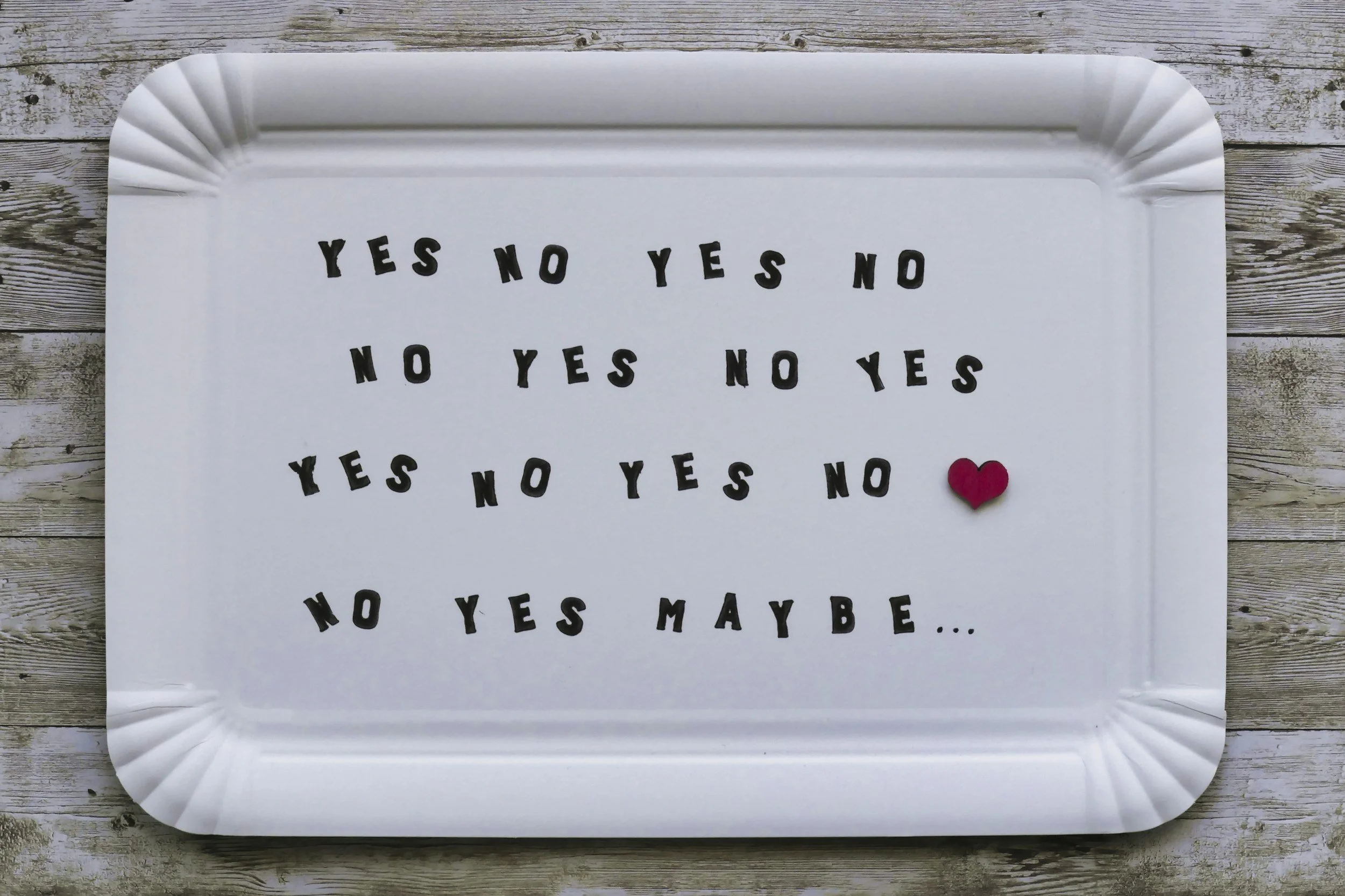
What is your relationship with yes and no? Does your yes means yes and your no mean no?
Can you trust your own discernment, that you can come to know God’s will for you?
What helps you to discern well? Can you act upon that which God calls you to? Is God calling you to anything now?
By Sister Leslie Keener, CDP
Sister Leslie Keener, CDP is the director of God Space, a vibrant spirituality ministry building community in Cincinnati and Northern Kentucky. A Sister of Divine Providence, she holds a Master’s in Ministry and a Certificate in Spiritual Direction and Retreats from Creighton University. Sister Leslie guides retreats, offers spiritual direction, and nurtures vocations within her community. Passionate about helping people encounter God in everyday life, she delights in the Virtue of Simplicity, meaningful conversations, dancing, and spicy food along the way.