Christ the King – of Sheep and Goats
/Here we are again at the Solemnity of Christ the King. For those of us who are attuned to the liturgical calendar, this feast marks the end of the Church year, and for us in the North, it also signals a change in season as we move toward winter. Although I appreciate the timing of this feast, I don’t love its name. Our Lord Jesus Christ, King of the Universe feels so high and mighty, so patriarchal and hierarchical too. However, like so many things with God that appear to be one way but turn out to be another, what Jesus calls us to is not high and mighty or glorious at all.

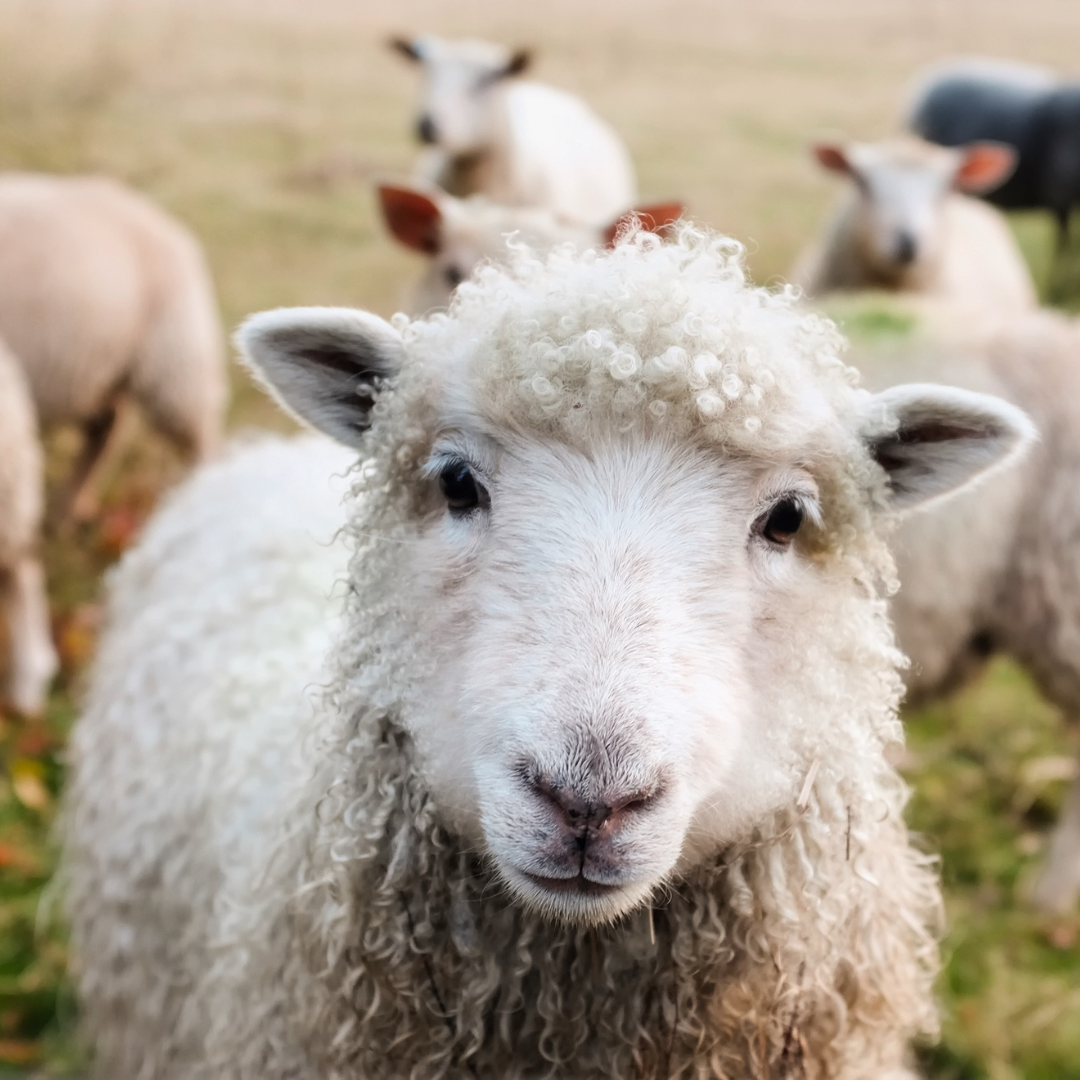
We definitely start out this Gospel with a hierarchy, though. Jesus describes himself sitting in glory on a throne, judging people and categorizing them as sheep or goats, a distinction I don’t personally understand. I mean, I know they’re two different animals, but why do they need to be separated, like are they hanging out together too much or what? What’s the difference between sheep and goats anyway? I brought that question to Google, as one does, and the answer came from a website called Treehugger: “The main difference between the two is how they forage. Sheep are grazers . . . [and] goats are browsers.” The website also claims differences in personality, and links to a bunch of pictures of goats in trees. “Because of a goat’s natural curiosity and independence, they can tend to get into more trouble than sheep.” Hm. They sound like fun to me.
While I don’t know many sheep or goats personally, I have had the experience of being judged and separated into groups of pass or fail. When I was in graduate school, there was a class I had to pass in order to continue in my program. The coursework for the class wasn’t difficult, and I was doing well in my other classes, so I thought I’d be fine. However, this class just about did me in. The professor had very specific expectations, but those were mystifyingly unclear to us students. We couldn’t discern a strategy to be successful, so we felt discouraged, anxious, and powerless. We worried together after every class, and more than once, one of us fully grown adults would break down crying. At one point I said, “I feel like we’re being separated into sheep and goats, and I don’t know how to be a sheep, so I might be a goat.” They were all church-y people like me, so they caught the reference. It turns out that most of us were sheep, but we all had our share of weeping and gnashing of teeth until our grades came out and our sheep-ness was confirmed.
That experience was hard because we didn’t know the criteria for success, but, when I look back at this reading, I realize that Jesus’s expectations are crystal clear. They’re the same standards that Jesus himself demonstrated: feed the hungry, give drink to the thirsty, welcome the stranger, clothe the naked, heal the sick, and visit the imprisoned. The expectations of Christ the King are no mystery; in fact, this reading literally repeats them four times. And it’s not the first time his followers have heard this message nor the first they’ve seen Jesus doing all these things. All along, Jesus has been telling his followers to love and care for vulnerable people, and in this reading, he tells us how.
Christ the King is actually not cold and distant or high and mighty at all. In the person of Jesus, he’s as near to people as he could be. When he heals, he touches people. When he spends time with people, he visits them in their homes and eats with them at their tables. When he teaches, he’s as close as the crowd will allow, sometimes teaching with a kid on his lap (the child kind of kid but maybe the goat kind too — who knows?).
Looking back at Jesus’s story about the sheep and goats, what's interesting is that neither group seems to have recognized Jesus in the people they encounter. The sheep weren't consciously doing these things for Jesus. They were simply responding to the needs of the people in front of them. Maybe that's part of the point. We don't always recognize Christ when we meet him. Sometimes we only realize later that he was there all along.

In the First Reading, we meet a similarly intimate image of God, not a king but a shepherd, and one who likely smells like the sheep.
“As a shepherd tends his flock when he finds himself among his scattered sheep, so will I tend my sheep. I will rescue them from every place where they were scattered when it was cloudy and dark. I myself will pasture my sheep; I myself will give them rest,” says GOD. “The lost I will seek out, the strayed I will bring back, the injured I will bind up, the sick I will heal.”
The shepherd will draw close to the neediest sheep. He will care for them, particularly the lost ones and those in need of healing. He will do whatever it takes to care for them. This shepherd is so loving that I think he would also bring ornery goats into his care.
It seems that Christ the King is not your average high and mighty glorious king, and, like the shepherd described in Ezekiel, he may even be a better shepherd than he is a king. Rather than sitting upon a throne, cold and distant, he’s with the most vulnerable. He’s near to all in need and tells us to move toward them too. In fact, he tells us that we will find him when we move to the margins and encounter vulnerable people. We may even meet Christ when we ourselves feel vulnerable.
I know I have it in me to be kind of a troublemaker. Sometimes I do my own thing rather than what Christ asks me to do. Maybe you do too. Even when we get a little goat-ish, though, when we go our own way or get so caught up in our own lives that we fail to notice someone in need, Christ keeps inviting us back. And when we ourselves are lost or hurting, Christ comes looking for us, too. The truth is, I don't think he’s particularly interested in whether we're sheep people or goat people. He's interested in whether we're paying attention to the people around us so that none of us ever feels lost.
Maybe this is what the reign of Christ looks like: not a kingdom of power and privilege, but a community where people notice one another, where no one is forgotten, where the hungry are fed and the stranger is welcomed. A kingdom where the shepherd knows the sheep, where even the goats have a place, and where we take care of one another.

For reflection:
What resonates with you in these readings?
When you hear the description of how the shepherd cares for the sheep with such tenderness, compassion, and attentiveness to their needs, what wells up in you?
Have you ever been a little goat-y, gone your own way instead of following God? How did God respond to you?
What’s God’s invitation for you? Maybe you could take a little time with God and see what God has to say to you.
By Sister Leslie Keener, CDP
Sister Leslie Keener, CDP is the director of God Space, a vibrant spirituality ministry building community in Cincinnati and Northern Kentucky. A Sister of Divine Providence, she holds a Master’s in Ministry and a Certificate in Spiritual Direction and Retreats from Creighton University. Sister Leslie guides retreats, offers spiritual direction, and nurtures vocations within her community. Passionate about helping people encounter God in everyday life, she delights in the Virtue of Simplicity, meaningful conversations, dancing, and spicy food along the way.